Scope the assignment
Linda confirms the purpose, users, deadlines, object list, location, and fee structure before work begins.

Fine Arts Appraiser
Accredited appraisals for insurance, donation, and estates — AAA accredited, USPAP-compliant, serving New England and South Florida.
Accredited Member · Appraisers Association of America
Start with the reason
The purpose of an appraisal determines its method, its format, and who will accept it. Insurance, donation, estate, sale, and advisory assignments each require a different definition of value. Start with yours.
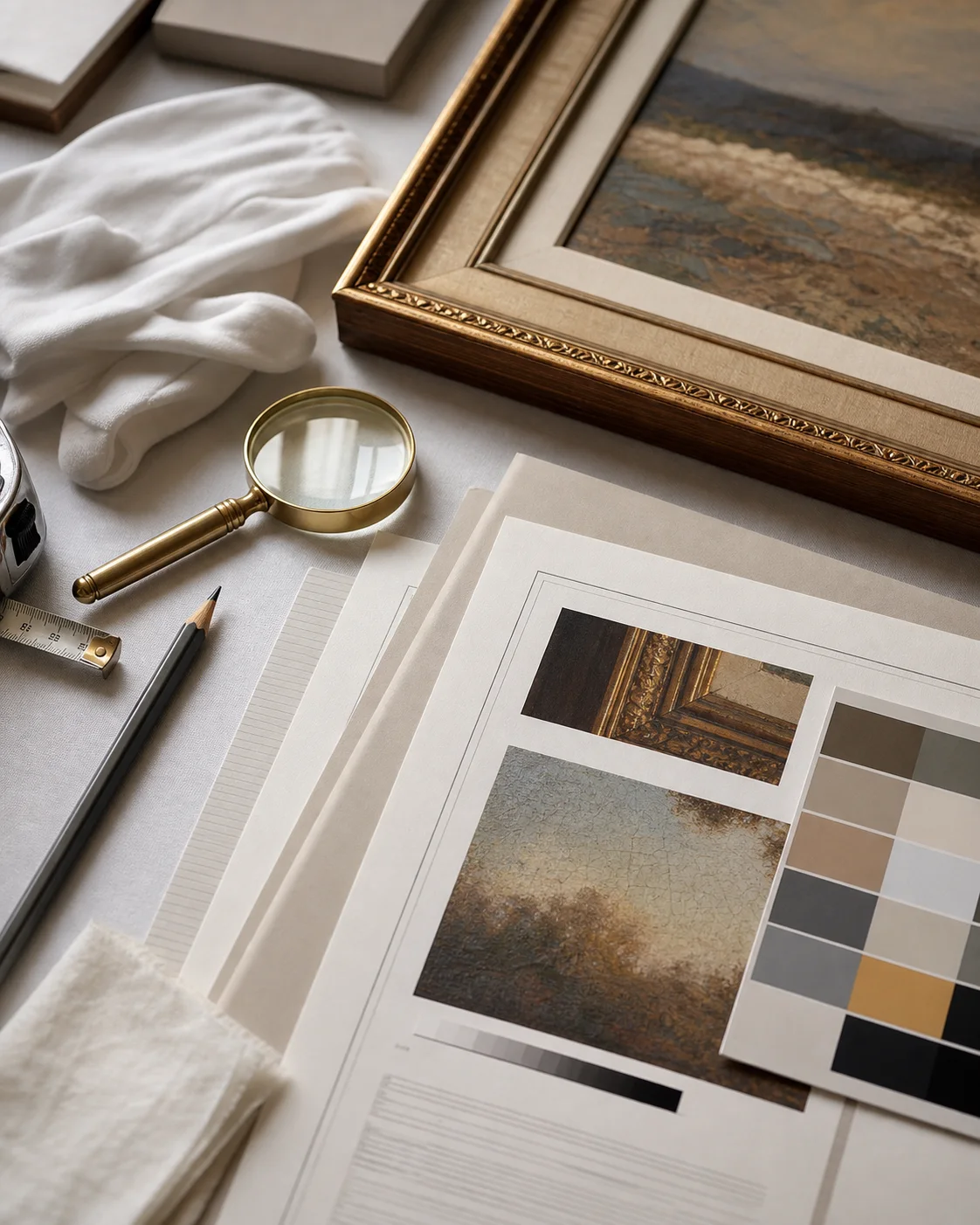
What you receive
Every assignment is grounded in object inspection, condition notes, market research, and a written report built to support the needs of the client.
How it works
Linda confirms the purpose, users, deadlines, object list, location, and fee structure before work begins.
Works are examined, photographed, measured, and documented with attention to labels, signatures, condition, and provenance.
Comparable sales, retail replacement sources, exhibition history, and relevant scholarship shape the final valuation.
The final report is delivered as a PDF you can share with insurers, counsel, or family. Printed copies are available at an additional cost.
Credentials
Appraisal is a discipline, not a guess. Linda’s valuations rest on formal training in appraisal studies at NYU, graduate study in art history at Harvard University and the Massachusetts College of Art and Design, current USPAP compliance, and accreditation by the Appraisers Association of America.
Before appraising collections, she directed an art studio and gallery complex and curated museum exhibitions — on the other side of the acquisitions and reports she now prepares.
Read about E. Linda Poras →
Client reviews
Her work is consistently thorough, professional, and prompt. Linda is a joy to work with, and I frequently recommend her to museum patrons, art collectors, and colleagues.
Nick Capasso, Director
The most comprehensive and well organized report, very well written, methodically structured and most impressive.
Michael H. Lally, Executive Director
We were in doubt at first because the value of one of our paintings seemed so high. But after she introduced us to a colleague at Christie's, they were able to bring in the amount she had quoted. We were thrilled, needless to say.
Hilary Chaplain
An incredibly thorough investigation, exceptionally well-written, as though it were a museum catalogue essay, not just an appraisal for the IRS.
Peggy Gillespie
Before we begin
An appraisal is an opinion of value for a stated purpose — not a certificate of authenticity or forensic authentication. I do not authenticate works. I do consult catalogue raisonnés and artist foundations to see whether a piece is recognized in the artist’s oeuvre, and I review provenance when it is available. If a work is not documented in those sources, I will say so and advise on next steps before a formal valuation proceeds. That basis is stated clearly in the report.
Professional appraisal standards require billing by the hour — never a percentage of the art’s value — so the valuation stays independent. That covers outreach to auction houses and galleries for comparables, conversations with specialists, analysis of an artist’s market, a written explanation of each figure, a USPAP-format report, high-resolution photographs, an artist biography, sources used, and delivery as a shareable PDF. Printed copies are available at an additional cost. Contact me for current rates.
It depends on the scope of the appraisal — how many works, how much research is required, and your deadline. Tell me what you need and when; insurance renewals and filing dates can usually be met.
For a preliminary opinion, yes. Certified appraisals for insurance, donation, or estate purposes normally require in-person inspection. Staff members visit your home to measure, record condition, and photograph the works — it is not always necessary for me to make every site visit myself.
Whatever you have: purchase records, prior appraisals, exhibition history, correspondence, photos including the back of the work. Gaps are normal.
Not sure which appraisal you need?